

Could minimally invasive surgery be right for me?
Minimally invasive surgery (MIS) refers to laparoscopic surgery and robotic surgery. These two types of surgery are different based on the tools used during the procedure. The surgeon will either use robotics or laparoscope tools. Surgeons will usually recommend a laparoscopic or robotic procedure based on their own experience and preference.
Minimally invasive surgeries are much more common now because this type of surgery can offer colorectal cancer patients a less painful way to remove part of the colon or the entire colon, create an ostomy, or reconnect and reconstruct the colon.
Minimally invasive surgery can also be used, in some cases, to remove rectal tumors.
Many studies have shown that these surgeries are just as safe as open surgery but they make recovery faster and easier.
Most patients can undergo minimally invasive surgery, such as those with:
- Early stage cancer
- Less advanced cancer
- No prior major surgeries
- Fewer radiation treatments
- Lower Body Mass Index (BMI)
Open surgery might still be recommended for patients with:
- Spread of cancer
- Metastases (additional growths)
- Need to remove the tumor completely
- History of medical conditions
- Higher Body Mass Index (BMI) or obesity
Talk to your doctor to find out if minimally invasive surgery is an option for you.
Top resources

FDA approves immunotherapy for MSI-H/dMMR stage II & III rectal cancer
The U.S. Food and Drug Administration approved dostarlimab (brand name Jemperli) as the first and only immunotherapy for adults with stage II or III rectal cancer that has a biomarker called MSI-H or dMMR.

A blood test that sees what scans can't
For many cancer patients, the end of active treatment brings a new kind of dread. Scans every few months and anxious waits for results. A blood test is changing that experience for a growing number of patients.
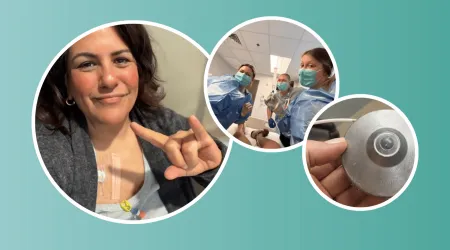
HAI therapy proves pivotal for pioneering patient
When Helen was diagnosed with metastatic colorectal cancer, the biggest concern for her medical team was that her cancer had spread to her liver. One type of therapy, hepatic artery infusion, offered a path forward, but there was a catch. Nobody at her hospital had ever done it before. She'd have to be first.