
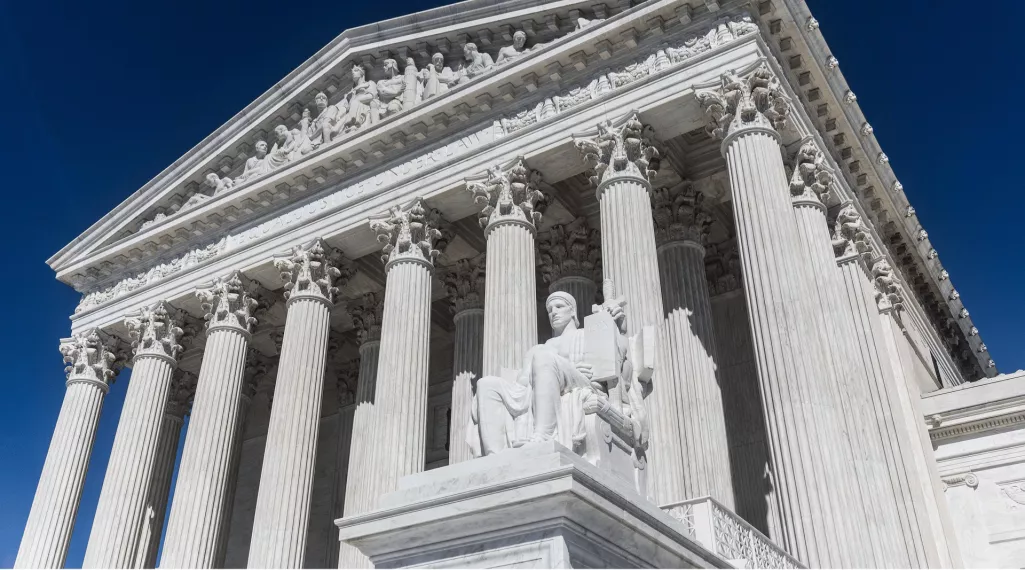
Supreme Court to rule on preventive CRC screening
This week, the U.S. Supreme Court will consider a case that could have profound implications for access to no-cost colorectal cancer screenings.
Since the Affordable Care Act (ACA) became law in 2010, health insurers have been required to provide preventive screenings for conditions such as colorectal cancer without charging a co-pay. However, an unfavorable ruling by the court on a seemingly unrelated constitutional issue could undermine that protection, allowing insurers to charge patients for these potentially lifesaving services.
To understand the issue before the Supreme Court, it’s important to consider the lower court decisions:
- In 2022, Braidwood Management, a closely held Texas-based for-profit company, sued in federal district court, arguing that the ACA’s requirement to cover HIV prevention and treatment medications violated its religious freedom. U.S. District Judge Reed O’Connor, who has previously ruled against the ACA, sided with Braidwood on the religious argument. He further ruled that the requirement to provide all preventive screenings without cost-sharing was unconstitutional, arguing that the U.S. Preventive Services Task Force (USPSTF) members were not properly appointed under the Constitution’s Appointments Clause.
- On May 15, 2023, the 5th U.S. Circuit Court of Appeals issued a stay on O’Connor’s ruling, preserving—for the time being—access to no-cost preventive screenings.
- On June 7, 2023, the appeals court partially overturned O’Connor’s decision but left several issues unresolved. The court agreed that USPSTF members were not properly appointed, making their recommendations unenforceable. However, the court limited the decision to apply only to the plaintiffs in the case—not to the millions of Americans currently covered under the ACA’s no-cost preventive care provision.
What the Supreme Court will do with this mixed ruling remains uncertain. The Colorectal Cancer Alliance has joined dozens of cancer and health organizations in urging the court to preserve this critical ACA protection. An unfavorable ruling could add a significant financial barrier to preventive colorectal cancer screening—a potentially lifesaving measure that too many Americans still avoid.
If the court rules unfavorably, there are two potential ways to resolve the issue:
- The Senate could formally appoint USPSTF members, similar to appointments for other federal agencies.
- The Secretary of Health and Human Services could establish an alternative review and recommendation process, likely within the Centers for Medicare & Medicaid Services (CMS), to determine which screenings must be covered without cost-sharing.
Both options would require strong public advocacy to ensure swift action by Congress or the administration. If needed, the Colorectal Cancer Alliance will prioritize this issue and keep you informed on how to help protect access to no-cost colorectal cancer screenings.
Top resources

Alliance Names Kate Watt Chief Development Officer
Watt’s extensive experience in building fundraising strategies and teams will help advance the Alliance's mission to end the disease.

He almost skipped the colonoscopy that saved his life
Andy said his lifestyle made it easier to ignore the blood in the stool, a symptom of colorectal cancer. But the “mirage of invincibility,” as he called it, was about to vanish.

Bottoms Up® Invitational Raises $5.7 Million in Five Years To Foster a Future Free From CRC
The fifth annual Bottoms Up® Invitational, organized by Today Show anchor Craig Melvin and CBS Sports HQ host Lindsay Czarniak, gathered a passionate crowd of celebrities, musicians, athletes and supporters to raise awareness and funds in the battle against colorectal cancer.