Lynch syndrome runs in families from one generation to the next and leads to the most common inherited form of colorectal cancer, also called hereditary non-polyposis colorectal cancer (HNPCC).
Whether you are newly diagnosed, in the midst of treatment, or are a survivor of colorectal cancer, you may be grappling with symptoms and side effects, or other related physical and emotional challenges.
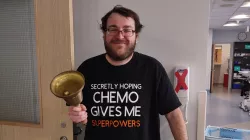
In his mid-40s, Dr. Ben Yokel experienced a partial bowel obstruction. One colonoscopy and CT scan later, Dr. Yokel was told everything’s fine—and to come back for a screening colonoscopy in 10 years.
A cancer diagnosis and treatment can be challenging for both the body and the mind. Many patients describe difficult emotions such as loneliness, anger, guilt, sadness, and worry, in addition to feeling overwhelmed with uncertainty about their health and other areas of their life.
Trying to communicate with a child or teenager has challenges of its own, and adding cancer to the mix can make things even more complex. However, we know that open communication between family members has a very positive effect on a child’s well-being. Here are some tips on talking to your children about cancer during this demanding time.
A normal and common response to the stress of a cancer diagnosis—especially after treatment completes—is to worry about it happening again. When cancer comes back it is called a recurrence, and fear and anxiety about recurrence can take many shapes and strike at any time.
While minimally invasive surgery has been shown to be as safe as open surgery, the recovery is expected to be faster and the risk of infection following surgery is smaller.
Nicole Obenski’s story began 16 years ago with a case of salmonella poisoning from a popular chain restaurant. Little did she know a few chicken fingers would change the course of her life.
I hope to be an inspiration to others and to convince people who haven’t had their colonoscopy that they need to do this. Stage IV is not a death sentence!
At 17, most teenagers are a hub of energy, busily taking on the challenges of college prep, managing friends and a budding social life. For Jessica Joseph, a stage III colorectal cancer diagnosis in December 2016 shifted her focus to advocacy on what was once popularly considered an "old man's disease."
Terri Taylor, a Registered Dietitian and Board Certified Specialist in Oncology Nutrition from the Virginia G. Piper Cancer Center at HonorHealth Scottsdale, Arizona, provides five takeaways for nutrition after a colorectal cancer diagnosis.
If there is one common theme in all of the literature and scientific papers, it is that cannabis and cannabinoids enhance the benefits of conventional treatment for side effect management.
When Kate Shin’s mother faced rectal cancer, clinical trials gave them precious time together. Now, Kate shares her story to encourage access to screening and innovative care, including clinical trials.
After a stage IV colorectal cancer diagnosis, Heather’s biomarker test revealed a critical mutation — opening the door to clinical trials and new hope.
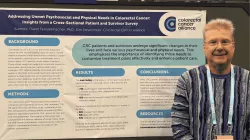
Uncover key survey findings on the unmet psychosocial and physical needs of colorectal cancer patients and survivors, and learn how the Alliance is shaping better care.
The U.S. Food and Drug Administration has approved sotorasib in combination with panitumumab for the treatment of adult patients with KRAS G12C-mutated metastatic colorectal cancer.