
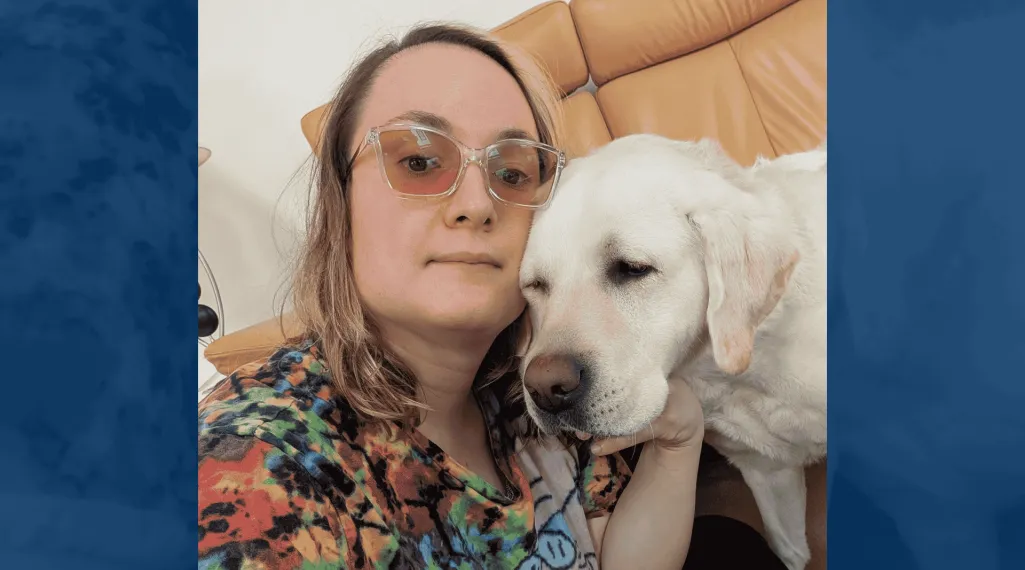
Jenny Trefzger: "My missed expiration date"
Jenny Trefzger was 16 when she first told a doctor about rectal bleeding. The doctor assumed she was having anal sex, due to being perceived as a queer boy, but she wasn't — she was a virgin. The assumption landed hard, however, and she never brought up the symptom again.
Through the rest of high school and into her twenties, Jenny was also tired in a way that never really lifted, and she assumed that was simply how she was built. It severely impacted her ability to socialize and make friends. Her ADHD meds kept being increased in dosage. She stopped looking for explanations.
But years later, as part of the bloodwork for her gender-affirming care, Jenny's endocrinologist checked her iron levels, they were extremely low, a red blood cell morphology was done to confirm, the results set off more alarm bells. A rectal bleed was suspected, and a colonoscopy was ordered. That led to the discovery of a five-centimeter tumor in Jenny's colon. Twenty-four days later, she underwent an open colectomy, finding two positive lymph nodes and perineural invasions. She was 23 during the colonoscopy, turning 24 only 16 days later, and had stage IIIc colorectal cancer.
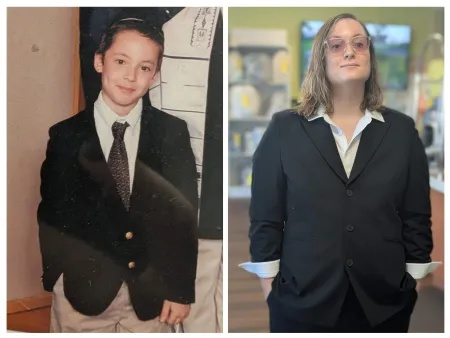
“Gender-affirming care found my cancer," Jenny says. "Had I not transitioned, I would have died."
Lynch syndrome was initially suspected, due to her Eastern Ashkenazi Jewish heritage and family history of pancreatic cancer. She was negative for all genetic testing at diagnosis. Follow-up testing in 2024 found a single, monoallelic, NTHL1 mutation. However, two biallelic NTHL1 mutations are needed to have NTHL1 Tumor Syndrome, which comes with an increased risk of multiple cancers. The current medical consensus, Jenny said, is that NTHL1 monoallelic individuals are only carriers for the condition. Her most recent and most up-to-date testing, whole exome sequencing, in 2026 found nothing new. Without a family history of CRC or known genetic condition, Jenny's stage IV colon cancer diagnosis at 23 remains a mystery.
The tumor was grade 1, or about as slow-growing as colorectal cancer gets. Doctors concluded it had most likely begun forming around the time of that aforementioned appointment at 16. The exhaustion she had written off as her baseline had been a symptom for most of her adolescence.
The staging was a little off, too. Her scans had also picked up a five-millimeter nodule in her left lung — too small, at the time, to meet the threshold for a PET scan. It was noted as likely benign. After chemotherapy, folfox, the nodule was gone, and Jenny was told she was in remission. Jenny believes that if she didn't have Kaiser Permanente, an HMO, as her insurance, there wouldn't have been a financial incentive for the radiologist to avoid recommending a PET scan.
Then her oncologist left the practice. Jenny got a letter in the mail stating as much and, having been told her cancer was gone, drew the obvious conclusion. She thought it was time to move on with her life. She had opted to have her port removed immediately after chemo ended. She did not want a constant reminder of what she had experienced, and didn't want to visit the infusion center every couple of weeks for a port flush. It wasn't until seven years later that she was diagnosed with post-traumatic stress disorder. Something now successfully managed with EMDR therapy.
"What autistic 24-year-old is supposed to understand all of that?" she says.
Two years passed with no oncology care for Jenny at all. None of her other doctors asked when she'd last had a scan, she said.
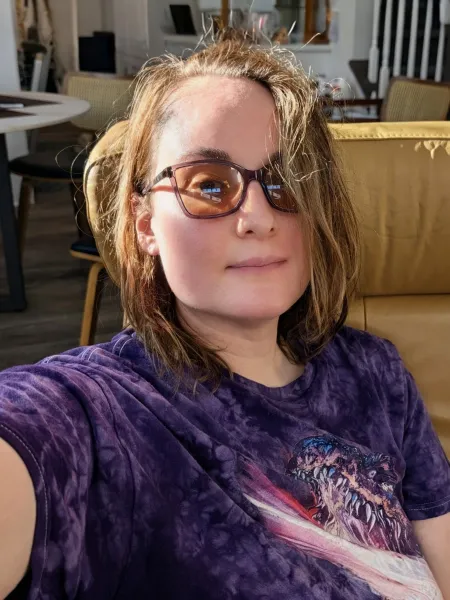
In 2020, she went in for facial feminization surgery at Johns Hopkins, waking up permanently blind in her left eye from a central retinal artery occlusion (CRAO). It was a stroke made more likely by cancer, which promotes clotting, in combination with tranexamic acid before/during surgery. She has yet to meet a doctor who has seen the two conditions together. It is possible fat grafting is the cause of the stroke, but vitroretinal and neuro-vascular specialists say either is likely. The risks of tranexamic acid and fat grafting were not discussed prior to surgery.
The scans that followed the stroke found nodules in both of her lungs. It took another year for them to grow large, to 1 cm in size, enough to biopsy safely, and when they did, the results came back as colorectal cancer rather than a new lung cancer. One of the tumors sat in exactly the same spot as the nodule dismissed in 2017.
From the beginning, Jenny had believed she had stage IV (metastatic) cancer. The record had finally agreed with her.
The test that came too late
Biomarker testing is what finally guided Jenny’s treatment. Her results showed wild type and microsatellite stable — a combination that told her oncologist a class of targeted drug called an EGFR inhibitor stood a real chance of working.
Jenny’s doctor added cetuximab to her chemotherapy regimen, folfiri, and her tumors started shrinking fast.
Jenny then asked to stop chemotherapy and have the remaining tumors cut out instead. Honestly, Jenny saw surgery as a way to take a break from chemo/targeted therapy, she felt terrible on FOLFIRI + cetuximab, her oncologist wanted her to continue with treatment. Her oncologist believed the drugs alone would likely cure her, but he referred her to a thoracic surgeon anyway. Two lung operations, VATS wedge resections, later, with no lymph node involvement in either, she finished her final round of chemotherapy, FOLFOX, in January 2022.
The unsettling thing is that cetuximab had been approved for colorectal cancer years before she was ever diagnosed.
"I could have speedrun my cancer," Jenny says. "One year instead of four."
She keeps a running list of what that might have bought her: her eyesight, less neuropathy, less chronic pain, a job, dating, a life she describes as closer to normal.
Trained to tolerate it
Jenny is an outspoken advocate across issues, including how autism shaped her cancer experience is an important part of her story.
Autistic children of her generation were routinely taught to mask, or to manage their own behavior until it read as typical to everyone around them. Jenny learned that lesson too well.
When, for instance, her care team told her to speak up as soon as chemotherapy became intolerable, she took the instruction at face value and waited for a threshold she had been trained her whole life never to reach.
Six months of numb hands and feet never crossed it.
"I thought I was supposed to tolerate it," she says.
She believes she should have been on a reduced dose of chemotherapy, and that this is what her doctors missed. They were waiting for her to tell them it was too much. She had been taught never to say that.
What an autistic patient calls tolerable may not be safe.
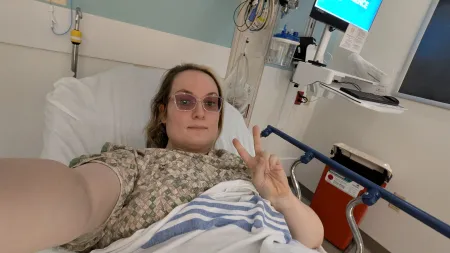
She even ended up in the hospital vomiting large amounts of blood in December 2021 during her final months of treatment. Nearly needing a blood transfusion. Jenny removed her 5FU bolus in the emergency room, causing a chemo spill. She was frustrated that the ER staff were not allowed to access her port. She had forgotten about the clip on the chemo line. Doctors had suspected a Mallory-Weiss tear. It ended up being severe gastritis. A change in nausea meds resolved the issue.
Jenny has changed since then. She has watched the system miss too much to keep trusting it to catch things on its own.
Two oncologists told her there was no reason to run ctDNA testing — a blood test that looks for fragments of tumor DNA — while she was in remission. She found a third who would order it.
Those results, negative every three months, are what let her stop reading every new symptom as cancer coming back and start treating her chronic abdominal wall pain as its own problem, which is how she finally got it diagnosed and got a surgery date.
"I'm a firm believer that the patient is a part of the medical team, without the patient, there is no medical team" she says.
She is careful to say she didn't do any of it alone. Her parents sat at her bedside correcting hospital staff on her pronouns and pulling nurses into the hallway. Plenty of trans patients, she points out, get misgendered while they are dying, with nobody in the room to object.
Her brother answered late night calls and her sister-in-law helped her get back to looking like herself after chemotherapy left her bald and with terrible skin as cetuximab had ruined her skin as well. She had also gained over 120lbs over the course of 4 years of intermittent treatment.
Jenny had struggled with a binge eating disorder since middle school. Getting it under control by the time she graduated high school, losing 40lbs. With it coming back her sophomore year of college. She developed an insatiable appetite as her cancer continued to grow but ended up losing 50lbs with no effort in the year before diagnosis. Doctors congratulated her on the weight loss. Once the initial tumor was removed, and her metabolism normalized, her disordered eating continued into treatment. She jokingly says “I was given marijuana and told all calories are good calories, I took that at face value. I was diagnosed at 170lbs. I finished treatment at 293lbs. Fortunately I've been able to get back down to 180lbs.”
Life goes on after cancer
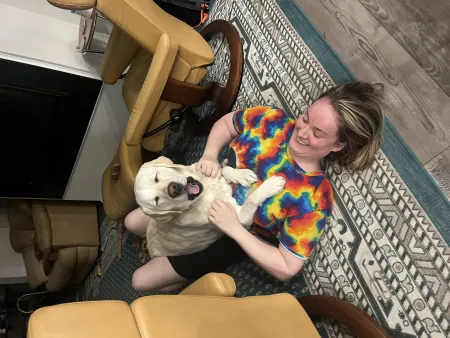
This summer, after a clear scan/negative ctDNA, Jenny and her oncologist made the call — cured. She has now passed 60 months of no evidence of disease. While she will continue doing ctDNA and scans, the odds of recurrence are now incredibly low. She wants people to know that scanxiety (scan anxiety) does get better, Jenny has started forgetting she has scans scheduled only to be reminded by a text from the hospital the week before.
She had an 85% chance of being dead by December 5, 2022, five years after her diagnosis. She calls that her "missed expiration date," and says it draws audible gasps when she speaks in public.
With a recent bilateral quadruple inguinal hernia repair under her belt, myofascial pain syndrome, chronic migraine, small fiber neuropathy, and anterior cutaneous nerve entrapment syndromes (ACNES), a frequently overlooked cause of chronic abdominal pain, are still ahead of her, and she is blunt that surviving is not the same as being fine. Blaming every problem that follows on cancer, she says, is just bad medicine.
Her advice to other survivors who are dealing with issues after treatment is to look beyond oncology for help. Oncologists are experts at treating cancer, not the damage treatment does. Neuromuscular specialists/neurologists, palliative care doctors, physical therapists, sports medicine doctors, trauma-informed therapists, pain-informed surgeons, and pain management doctors can better manage the aftereffects of treatment. If you'd get a second opinion as an active cancer patient, why not get one as a cancer survivor?
Most of her energy now goes into advocacy. From her home in Lewes, she has spent the past few months in the “home stretch,” pushing for Delaware's biomarker coverage bill, which the governor signed and that will take effect in 2027. She talked a local commentator with a following of 12,000 into backing it and messaged the bill's lead sponsor directly. She feels the bill would have passed without her involvement but was happy to help.
She also answers messages from autistic/queer people with colon cancer who write to her because so little of what gets published for patients was built with them in mind. She is easy to find on purpose.
What she doesn't want is a pedestal.
"When Chadwick Boseman died, I thought, well, I'm dead," she says. "And then I didn't die. If my autistic ass can beat colon cancer, why can't anyone else? I want people to read my story and think: I can do that too."
Story supported by

Top resources
Alliance Names Kate Watt Chief Development Officer
Watt’s extensive experience in building fundraising strategies and teams will help advance the Alliance's mission to end the disease.

He almost skipped the colonoscopy that saved his life
Andy said his lifestyle made it easier to ignore the blood in the stool, a symptom of colorectal cancer. But the “mirage of invincibility,” as he called it, was about to vanish.

Bottoms Up® Invitational Raises $5.7 Million in Five Years To Foster a Future Free From CRC
The fifth annual Bottoms Up® Invitational, organized by Today Show anchor Craig Melvin and CBS Sports HQ host Lindsay Czarniak, gathered a passionate crowd of celebrities, musicians, athletes and supporters to raise awareness and funds in the battle against colorectal cancer.