
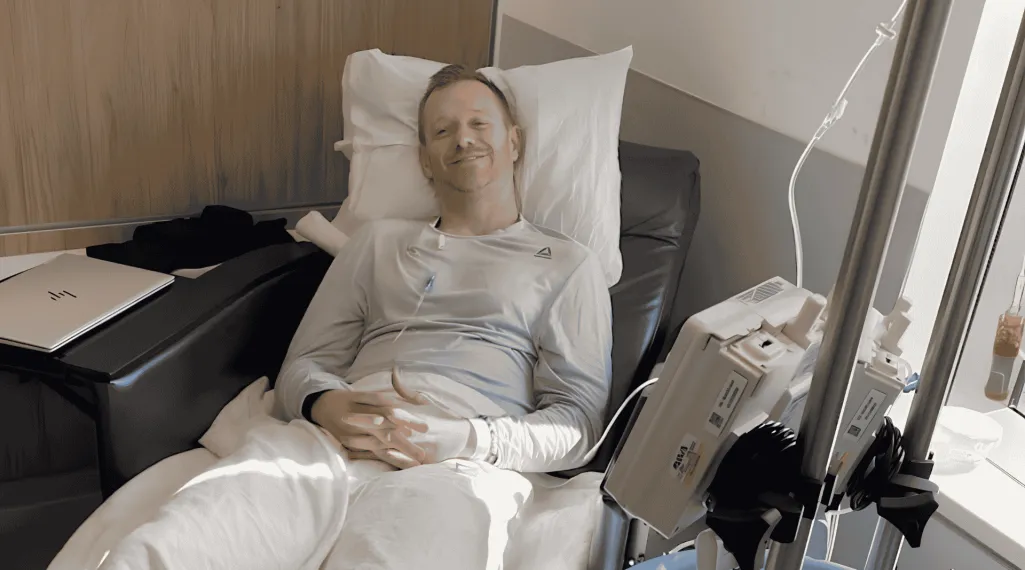
He almost skipped the colonoscopy that saved his life
Andy G. was 38 and had never felt healthier. But three or four times a year, he noticed blood on his stool.
"It was rare, and it wasn't bothering me in my day-to-day activities,” Andy said, “so I largely dismissed it."
Andy said his lifestyle made it easier to ignore the blood in the stool, a symptom of colorectal cancer. He played basketball, trained jiu-jitsu, and lifted weights. He hadn't eaten red meat in a decade, instead opting for a plant-based diet.
"If I were leading a much less healthy lifestyle, I probably would have been more concerned," Andy said.
But the “mirage of invincibility,” as he called it, was about to vanish. Colorectal cancer does not discriminate.
A chain of small chances
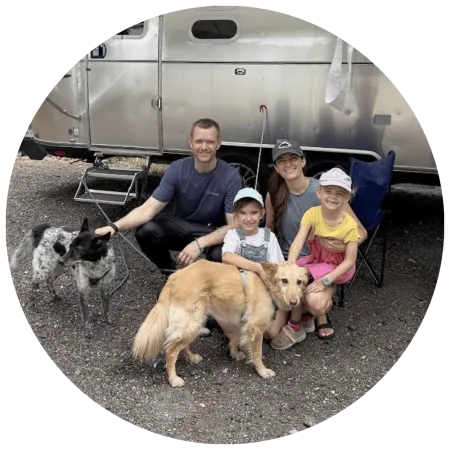
Andy was closing in on 40. As a dad, he wanted to be smarter about his health, so he booked some routine blood work — just to be safe.
During the appointment, his doctor asked whether anything else was going on. Almost in passing, he mentioned the blood. Almost in passing, the doctor mentioned a colonoscopy.
That brief conversation changed everything.
"I got very lucky," he said.
The first available colonoscopy appointment was six months out. As it approached, Andy pushed it back. Then he pushed it back again, and nearly canceled.
"I just didn't want to go through the hassle of a colonoscopy," he said. "It was my first one, and I heard the prep is rough. And I was thinking, why am I going to do this when I'm 38 years old and supposedly healthy?"
What kept the appointment on his calendar was his father, who was diagnosed with prostate cancer at 52.
"I'm due for screening in four years anyway," Andy remembered thinking, "so maybe I just get it now."
The prep, when he finally did it, was about what he'd been warned about.
"It's certainly not pleasant," he said. "But I just went through the wringer in the last 12 months with cancer treatment. Looking back, the colonoscopy prep is nothing."
The colonoscopy found stage III rectal cancer.
'I think about it every day'
Andy later pressed his care team on what would have happened had he waited. They were reluctant to give a firm idea, he said, but told him they would not have been shocked if the cancer had metastasized (spread to other parts of the body) within 12 to 18 months.
"If I had waited till 42 — I don't think I would have made it to 45 — it would be a much different situation than it is today," Andy said.
He started FOLFOX on his 39th birthday in July 2025, had a laparoscopic resection that December, and finished chemotherapy in April 2026 with a complete response. He is now in surveillance: blood work every three months and scans every six.
To anyone sitting where he sat, Andy makes an argument about odds over fear.
"If they find nothing, then you're probably good for five to 10 years," he said. "And if they find something earlier than expected, then you have more options about how to treat it."
Andy had options. He avoided radiation, for instance. And after the complete response, he was able to scale back his maintenance chemotherapy.
Neither route would've been likely if he had been diagnosed later, with a more advanced disease.
"If anything that I'm doing can help one person go get screened and prevent something, then it's worth every second of my time," he said.
This story was supported by

Top resources
Alliance Names Kate Watt Chief Development Officer
Watt’s extensive experience in building fundraising strategies and teams will help advance the Alliance's mission to end the disease.

Bottoms Up® Invitational Raises $5.7 Million in Five Years To Foster a Future Free From CRC
The fifth annual Bottoms Up® Invitational, organized by Today Show anchor Craig Melvin and CBS Sports HQ host Lindsay Czarniak, gathered a passionate crowd of celebrities, musicians, athletes and supporters to raise awareness and funds in the battle against colorectal cancer.

Alliance Launches Online Hub Demystifying Unexpected Home Delivery of Screening Tests
The Colorectal Cancer Alliance and Abbott have launched a new online hub to explain why people receive unexpected home delivery of colorectal cancer screening tests.