
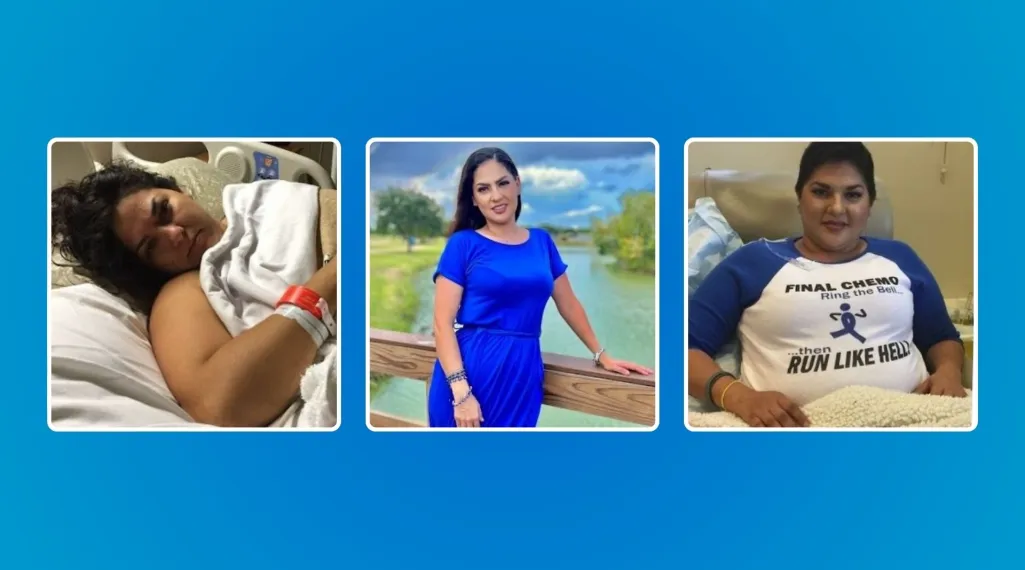
When no one spoke her language, she became an advocate
Azucena Reyes was 32, Hispanic, and pushing through months of nausea when sudden stomach pain sent her to the hospital.
She thought her ovary had burst, but it turned out to be a tumor. Doctors reassured her right away. Colon cancer, they said, happens to people "African American and older in their 60s" — not someone like her. But they were wrong. Azucena was diagnosed with stage 3B colon cancer, according to Healthline.
What made recovery even harder, Reyes says, was the isolation that followed. There were no advocacy groups to turn to, and no one her age who'd been through it. So years after finishing treatment, she decided to become that person for someone else and joined the Colorectal Cancer Alliance's Never Too Young Taskforce, which works to build awareness around young-onset colorectal cancer.
Her focus now is reaching Spanish-speaking communities, where she says access to information — and advocates who look like her — is still scarce. "There aren't many advocates who speak Spanish, so I'm passionate about being that person for my community," she says.
Her story reflects a trend one of the Alliance's medical advisors, Dr. Richard Wender, is watching closely: Colorectal cancer is rising fastest among Hispanic and Latino adults under 50. His advice is simple — know your risk, and don't let anyone wave off your symptoms because of your age.
Originally reported in Healthline. Read the full story here.
Top resources
Jenny Trefzger: "My missed expiration date"
Jenny Trefzger was 23 when gender-affirming care found her colon cancer. Nine years later, she wants readers to know that you don't have to be extraordinary to beat cancer.

Alliance Names Kate Watt Chief Development Officer
Watt’s extensive experience in building fundraising strategies and teams will help advance the Alliance's mission to end the disease.

He almost skipped the colonoscopy that saved his life
Andy said his lifestyle made it easier to ignore the blood in the stool, a symptom of colorectal cancer. But the “mirage of invincibility,” as he called it, was about to vanish.