
Cancer-related VTE
Cancer-associated VTE is not rare; it is a major complication of cancer and its treatment. VTE in cancer can be linked to known factors like surgery or hospitalization, as well as cancer-driven due to the ongoing risks because of the disease itself.
What is VTE?
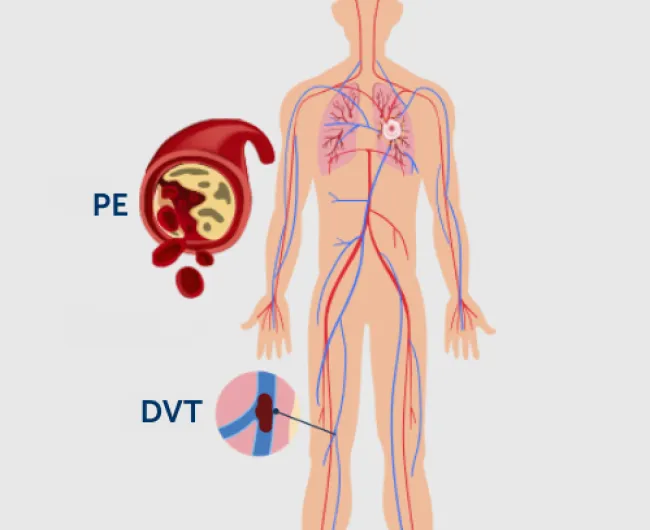
Venous thromboembolism (VTE) is a common and preventable condition where a blood clot forms in a vein, usually in the legs but sometimes in the arms.
VTE includes two main conditions:
- Deep vein thrombosis (DVT): a clot in the leg, thigh, or pelvis (most common)
- Pulmonary embolism (PE): when a clot breaks loose and travels to the lungs (can be life-threatening)
VTE is often underdiagnosed but serious, especially in people with cancer.

Why VTE Matters in Cancer
Cancer-associated VTE is not rare; it is a major complication of cancer and its treatment. VTE in cancer can be linked to known factors like surgery or hospitalization, as well as cancer-driven due to the ongoing risks because of the disease itself.
- 20–30% of all first VTE events are cancer-related
- Cancer patients have a 4 – 7x higher risk of developing VTE compared to people without cancer
- VTE is one of the leading causes of death in cancer patients outside of cancer progression itself
- Colorectal cancer is considered moderate to high risk for cancer-associated thrombosis compared to other tumor types

When Risk is Highest
VTE risk is not constant. It increases during specific periods:
- Early after cancer diagnosis
- During chemotherapy
- After surgery (risk is higher post-operatively in cancer patients)
- Within the first 3 months of starting chemotherapy, when nearly half of VTE events may occur (approximately 47%)
- After discharge, due to the challenges during the transition of care
This timing is critical for education and prevention planning.
Why Colorectal Cancer Patients Are at Increased Risk
Cancer creates a pro-thrombotic (hypercoagulable) state, a condition where blood has an increased tendency to form clots, leading to a higher risk of venous or arterial thrombosis. In CRC specifically:
Prevention in CRC Patients
Surgical patients
- Standard of care: postoperative anticoagulant prophylaxis
- Extended prophylaxis (up to 4 weeks) may be recommended after major abdominal cancer surgery
Ambulatory patients on chemotherapy
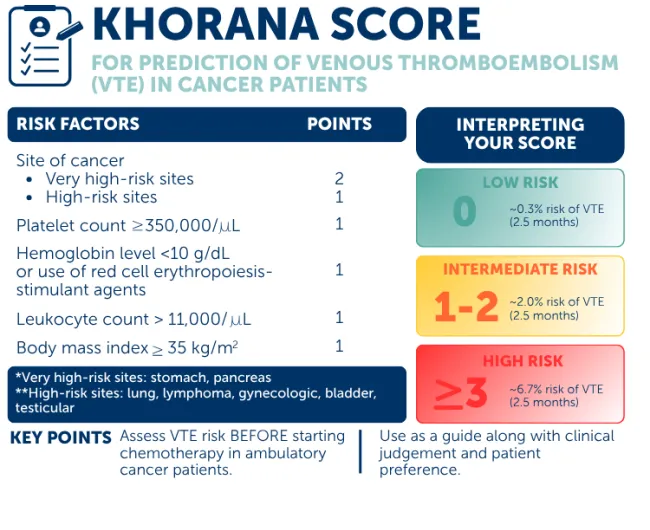
- Clinicians may use risk assessment tools such as the Khorana score to estimate clot risk in patients undergoing chemotherapy
- High-risk patients may be offered preventive anticoagulation (blood thinners)
Not all CRC patients automatically receive prophylaxis. This is risk-based.
Signs and Symptoms
Many patients don’t realize these symptoms are related to cancer risk and should feel empowered to discuss risk, options, and when to seek urgent care.
Possible DVT symptoms
- Leg swelling (usually one-sided)
- Pain or tenderness
- Warmth
- Redness or discoloration
Possible Pulmonary Embolism (PE) symptoms (medical emergency)
- Sudden shortness of breath
- Chest pain (worse with breathing)
- Rapid heart rate
- Lightheadedness

Treatment of Cancer-Associated VTE
Historically:
- Low molecular weight heparin (LMWH) was standard
Currently:
- Direct oral anticoagulants (DOACs) (e.g., apixaban, rivaroxaban, edoxaban) are now commonly used
- Treatment duration is typically at least 3–6 months, often longer if cancer is active
Important nuance for CRC:
- GI cancers may have a slightly higher bleeding risk with some anticoagulant medications
- Treatment choice balances clot risk vs bleeding risk
Questions to Ask Your Doctor About VTE
VTE Resource
If you have colorectal cancer, it’s important to talk to your care team about your risk for blood clots. Use this guide to learn key information about VTE, why it matters, and signs and symptoms to be aware of.
Educational content developed with support from

Top resources
Alliance Breaks Down New ACS Screening Guidelines
The Colorectal Cancer Alliance is urging Americans to prioritize colorectal cancer screening, as the American Cancer Society (ACS) released updated guidelines today.

A blood test that sees what scans can't
For many cancer patients, the end of active treatment brings a new kind of dread. Scans every few months and anxious waits for results. A blood test is changing that experience for a growing number of patients.
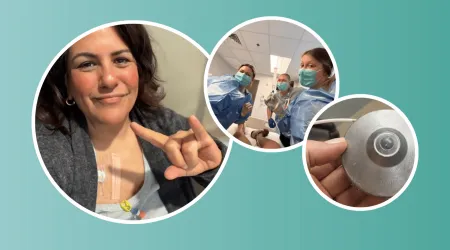
HAI therapy proves pivotal for pioneering patient
When Helen was diagnosed with metastatic colorectal cancer, the biggest concern for her medical team was that her cancer had spread to her liver. One type of therapy, hepatic artery infusion, offered a path forward, but there was a catch. Nobody at her hospital had ever done it before. She'd have to be first.