

A blood test that sees what scans can't
For many cancer patients, the end of active treatment brings a new kind of dread. Scans every few months, anxious waits for results, and the nagging fear that the disease could return.
A blood test is changing that experience by helping some patients and their doctors detect signs that cancer may have returned, sometimes before it can be seen on a scan.
Signatera is a personalized blood test developed by Natera. It looks for tiny amounts of DNA released into the bloodstream. The test is designed to detect small traces of cancer that may remain in the body after treatment.
Unlike a standard CT scan or traditional blood marker test, Signatera is customized for each patient. Doctors first analyze a sample of the patient’s tumor DNA to create a fingerprint of that specific cancer. Future blood tests are then checked for matching pieces of tumor DNA.
According to Natera, when Signatera returns a positive result, it correctly predicts cancer recurrence more than 98 percent of the time. The test has also been evaluated in numerous peer-reviewed clinical studies.
The Alliance asked several patients using Natera about their experiences. This is what they said:
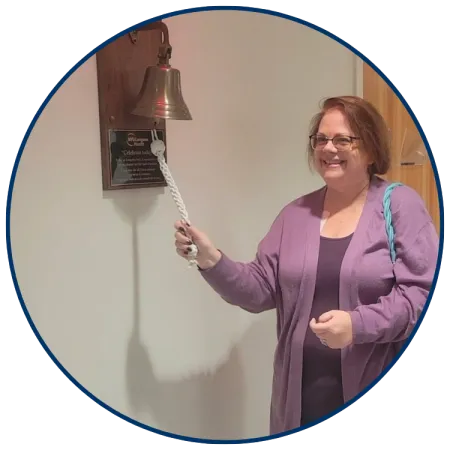
Sharon
Sharon, 58, was diagnosed with stage IV colon cancer that had spread to her liver and lymph nodes in 2024. She's been using Signatera since her diagnosis, and she's noted its sensitivity.
"Twice since then, in the span of a year, my Signatera test has come back positive, though extremely low numbers, even though my scans came back clear," she said.
Both times, her care team at NYU Langone Perlmutter was able to treat the recurrences while they were still small.
"I don't know how long it would have taken to find them on the scans or how far it might have spread," she said.

Vickey
Vickey, 45, had a similar experience. Diagnosed with stage IV colorectal cancer that had spread to her liver, she received a negative Signatera result in August 2025 and was moved to less frequent scanning with a pause in chemotherapy.
But when her November 2025 test came back positive, her team ordered further imaging.
The test was right. The cancer had spread to her lungs at a size too small to appear on a CT scan, but visible on a PET MRI.
"My experience has been that it is detecting cancer when scans can't," she said, "which means my team is able to act quickly and respond to tumors and lesions when they are still small."

Amanda
Amanda, 41, has been using Signatera since 2022 following a stage IV colon cancer diagnosis that had spread to her liver. Currently NED (no evidence of disease), she values the ability to monitor proactively.
"I like being able to be proactive, not reactive, when it comes to my surveillance," she said. "Once you are finished with treatment, you are no longer in action mode. It is common to feel like you are fending for yourself after having been watched so carefully throughout treatment. Signatera allows patients to take additional action."
Currently, Signatera is covered by Medicare and most major insurance providers for several cancer types and treatment settings, including stage II to IV colorectal cancer.
A landmark study published in the journal Nature Medicine, which included data from more than 1,000 patients with colorectal cancer treated with surgery, found that MRD status four weeks after surgery was one of the strongest predictors of whether the cancer would return. Researchers found the blood test was more effective at identifying recurrence risk than many traditional measures doctors currently rely on.
Patients whose test showed remaining cancer cells and who then received chemotherapy saw meaningful benefit, while those whose test showed no remaining cancer cells did not. This research suggests that the test could help spare some patients from unnecessary treatment while ensuring others receive it promptly.
The logistics of using Signatera are designed to minimize burden. After the one-time tumor sample is collected, typically already in storage at a patient's treatment facility, ongoing monitoring requires only a periodic blood draw, which can be done at a clinic or at home through Natera's at-home blood draw service. Results from subsequent tests are typically delivered within a week.
For patients who want to ask their oncologist about Signatera, Vickey offers straightforward advice: "When you are talking to your team about comprehensive care, ask about this test."
This article supported by

Top resources
Why I answer the phone: A cancer care navigator's view
Meet Paige Edmonds, a social worker behind the Alliance's helpline — and the personal loss that led her there.
HAI therapy proves pivotal for pioneering patient
When Helen was diagnosed with metastatic colorectal cancer, the biggest concern for her medical team was that her cancer had spread to her liver. One type of therapy, hepatic artery infusion, offered a path forward, but there was a catch. Nobody at her hospital had ever done it before. She'd have to be first.

From diagnosis to hope: How a clinical trial is making a difference for Kevin
Clinical trials can be life-changing. Learn how Kevin's participation in a Dana-Farber trial is helping him monitor colorectal cancer recurrence — and what it could mean for others.