

Colorectal cancer survivors

We're here to help
Survivorship is a success, but it’s also a responsibility. We are your allies, ready to share the latest information about being a colon cancer or rectal cancer survivor and taking steps to stay cancer-free and healthy.

What comes next?
After treatment has completed, colorectal cancer survivors may face physical, emotional, and social issues.
While you may be relived to have your treatment completed, adjusting to your "new normal" can take some time. We have useful resources that can help during this phase of recovery.

Recovery after treatment: cancer rehabilitation
Doctors sometimes recommend cancer rehabilitation to help their patients return to their regular activities of daily living. These programs aim to restore and maintain your physical and emotional well-being.
Participating in cancer rehabilitation may help patients experience a faster and more complete recovery.

Survivor’s guilt
Survivor’s guilt can range from questions of “Why me?” and “Why did I survive?” to depression and even suicidal thoughts.
Some may try to make sense of why they survived, and others didn’t, while some people may feel guilty about the changes their families are going through.


Returning to exercise and activity
Exercise is generally safe and beneficial after treatment for colorectal cancer. In fact, studies have shown that exercise is effective at reducing certain side effects from treatment.
Always talk to your doctor before starting any exercise program.

Anxiety about cancer coming back
After treatment completes, a common response to the stress of a cancer diagnosis is to worry about it happening again. When cancer comes back it is called a recurrence, and fear and anxiety about recurrence can take strike at any time.

Top resources

A blood test that sees what scans can't
For many cancer patients, the end of active treatment brings a new kind of dread. Scans every few months and anxious waits for results. A blood test is changing that experience for a growing number of patients.
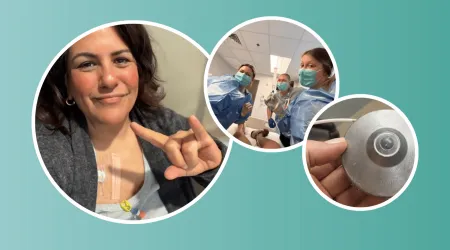
HAI therapy proves pivotal for pioneering patient
When Helen was diagnosed with metastatic colorectal cancer, the biggest concern for her medical team was that her cancer had spread to her liver. One type of therapy, hepatic artery infusion, offered a path forward, but there was a catch. Nobody at her hospital had ever done it before. She'd have to be first.
Does it matter where your colon cancer is located?
Understanding colon cancer sidedness is one more tool to help patients ask the right questions and advocate for the most effective treatment plan.